Downloads

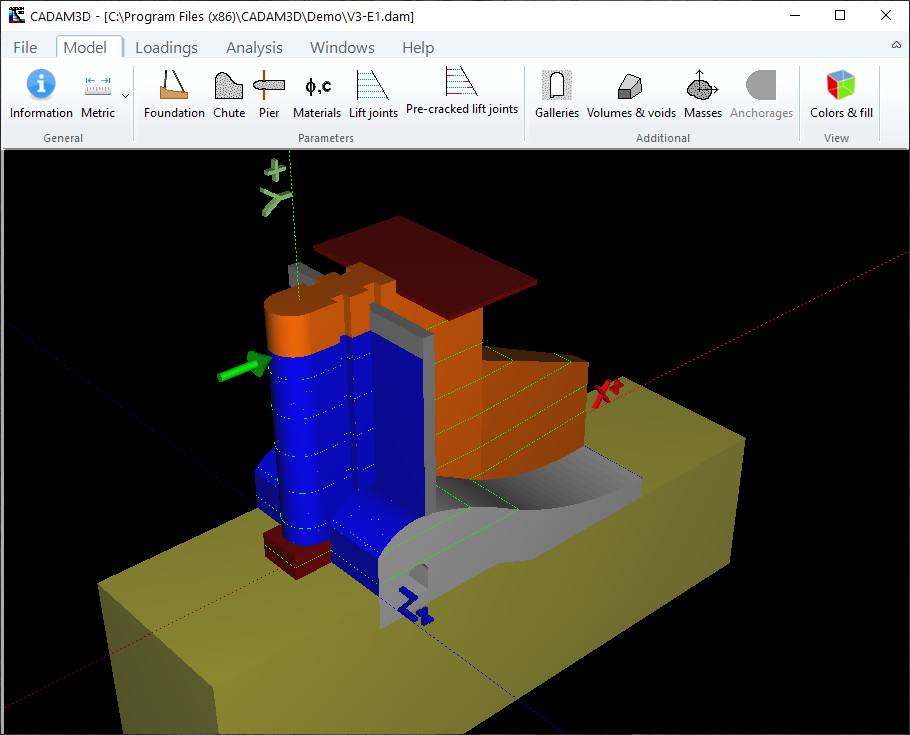
CADAM3D is a user-friendly software based on the gravity method originally developed for one of the world biggest concrete dam owner, Hydro-Quebec, and for Dams and Hydrology of the Quebec Ministry of Environment (Quebec's legislator for dam safety). CADAM3D is fully functional and is intensively used by Hydro-Quebec since 2005. To our knowledge, no other software similar to CADAM3D is available at this time.
If you perform stability analyzes of concrete hydraulic structures, this software will allow you to perform them much faster and more efficiently. If you are interested in this type of software and would like to try CADAM3D for free, please click on the button "Contact us for a free trial of CADAM3D" to send us a message.
The impact of Redshift Mutating Materials on the metal industry could be significant. With the ability to create metals with specific properties, manufacturers could produce materials that are stronger, lighter, and more durable than ever before. This could lead to a reduction in waste, improved efficiency, and increased sustainability.
In a world where technology is advancing at an unprecedented rate, it’s not uncommon to hear about innovative materials and technologies being developed. However, every now and then, a breakthrough comes along that has the potential to disrupt entire industries and change the way we live and work. The Pixel Lab’s Redshift Mutating Materials, specifically their work with metal, is one such revolutionary development. The Pixel Lab Redshift Mutating Materials- Metal
As researchers continue to develop and refine this technology, we can expect to see significant breakthroughs in the coming years. Whether it’s in aerospace engineering, medical devices, or energy storage, Redshift Mutating Materials is poised to make a lasting impact on the world. The impact of Redshift Mutating Materials on the
The Pixel Lab Redshift Mutating Materials- Metal: A Revolutionary Breakthrough** In a world where technology is advancing at
The Pixel Lab, a cutting-edge research and development facility, has been working on a top-secret project to create materials that can change and adapt in real-time. Their Redshift Mutating Materials technology is a game-changer, allowing for the creation of materials with unprecedented properties. By manipulating the molecular structure of materials, The Pixel Lab has developed a way to create metals that can change shape, color, and even properties in response to environmental stimuli.
The science behind Redshift Mutating Materials is complex, but essentially, it involves the use of advanced nanotechnology and artificial intelligence to manipulate the molecular structure of metals. By creating a matrix of nanoparticles, The Pixel Lab’s researchers can control the arrangement of atoms within the material, allowing for the creation of metals with unique properties.
The Pixel Lab’s Redshift Mutating Materials technology has the potential to revolutionize industries and change the way we live and work. With its ability to create materials with unprecedented properties, this technology could enable the development of advanced technologies that were previously thought impossible. While there are challenges and limitations to be addressed, the future of Redshift Mutating Materials is exciting and full of possibilities.
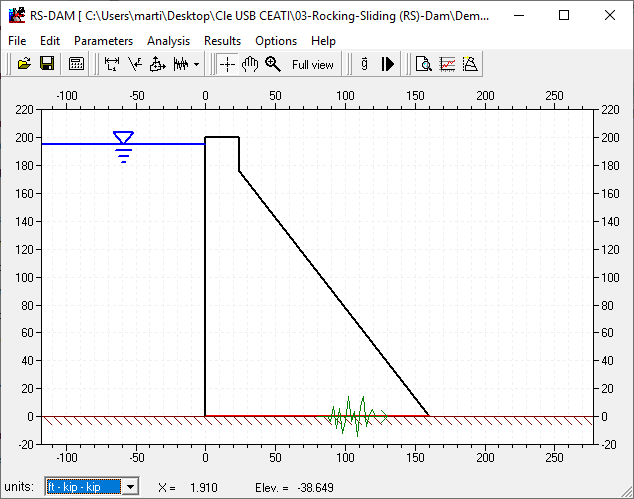
RS-DAM is a computer program that was primarily designed to provide a computational tool to evaluate the transient response of a completely cracked concrete dam section subjected to seismic loads. RS-DAM is also used to support research and development on structural behavior and safety of concrete dams.
RS-DAM is based on rigid body dynamic equilibrium. It performs a transient rocking and/or sliding analysis of a cracked dam section subjected to either base accelerations or time varying forces. Several modelling options have been included to allow users to explore the influence of parameters (e.g. geometry, additional masses, variation of the uplift force upon rotation, hydrodynamic pressures in translation (Westergaard) and rotation, center of rotation moving with sliding, coefficient of restitution of impact, etc...). RS-DAM is developed in a university context and has no commercial aspect.
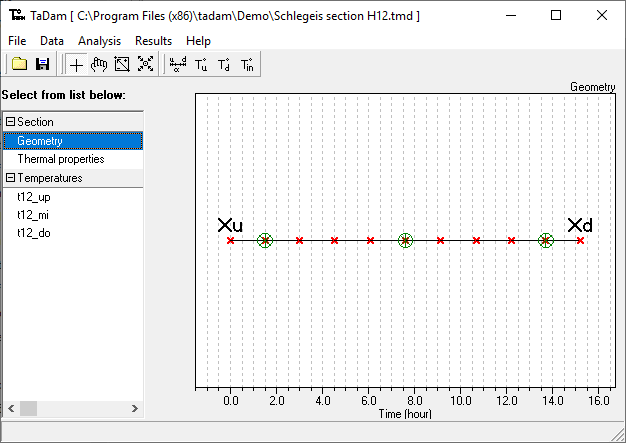
TADAM (Thermal Analysis of concrete DAMs) software employs a new frequency-domain solution technique to solve the 1D thermal transfer problem, allowing the calculation of temperature histories in a concrete dam section.
The direct solution calculates the evolution of the temperature distributions from the temperature histories of the upstream and downstream faces. The inverse solution uses temperature histories, measured inside the section, in order to calculate the temperature fields at the external faces, while taking into account the thermal wave attenuation effects and the phase angles along the section.
TADAM is developed in a university context and has no commercial aspect.