The concept of Ayurveda (the science of life) governs the traditional kitchen. Food is medicine. Spices are not just for heat; turmeric is antiseptic, cumin aids digestion, and cardamom is a detoxifier. The lifestyle here is Sattvic (pure, balanced)—emphasizing fresh, seasonal, vegetarian meals eaten with the hands. Why the hands? Ancient texts suggest that the nerve endings in the fingertips stimulate digestion when one touches the food before eating. The joint family system, though fading in urban hubs, still thrives in the act of the thali (platter): a mother serving her child, a wife feeding her husband, and the sacred act of Atithi Devo Bhava (The guest is God).
To live the Indian lifestyle is to accept entropy. It is the ability to find peace in the middle of a traffic jam of cows, cars, and camels. It is the deep-seated belief that everything—joy, sorrow, wealth, poverty—is temporary ( Maya ). And in that transience, one learns to celebrate the present moment with a chai, a smile, and a tilak on the forehead. It is, in every sense, a beautiful chaos. Indian culture, lifestyle blog, Indian traditions, Ayurveda diet, Indian festivals, Sari draping styles, joint family system, modern Indian lifestyle, Yoga and meditation, Indian food diversity.
India is not a country; it is a continent compressed into a subcontinent—a living museum of human civilization where the 21st century rubs shoulders with the Vedic age. To speak of "Indian culture and lifestyle" is to attempt to describe the fragrance of a million flowers blooming simultaneously. It is chaotic, colorful, deeply spiritual, and paradoxically pragmatic. From the snow-capped Himalayas in the north to the tropical backwaters of Kerala in the south, the lifestyle of an Indian is a daily negotiation between ancient traditions and rapid modernization.
If there is one word that defines the Indian lifestyle, it is Utsav (celebration). With a calendar packed with over 30 major festivals, life in India is a perpetual pause from work. Diwali (the festival of lights) is not just a day; it is a two-week lifestyle shift involving deep cleaning homes, buying new clothes, exchanging mithai (sweets), and bursting firecrackers. Holi, the festival of colors, dissolves social hierarchies for a day as strangers smear gulal on each other's faces.
Indian culture and lifestyle are not static museum artifacts. They are a river—sometimes gentle, sometimes flooding its banks. The youth are redefining what it means to be Indian: they reject regressive practices like dowry and untouchability, yet they embrace the philosophy of Vasudhaiva Kutumbakam (The world is one family). They order pizza with extra cheese, but they still save room for Gulab Jamun .

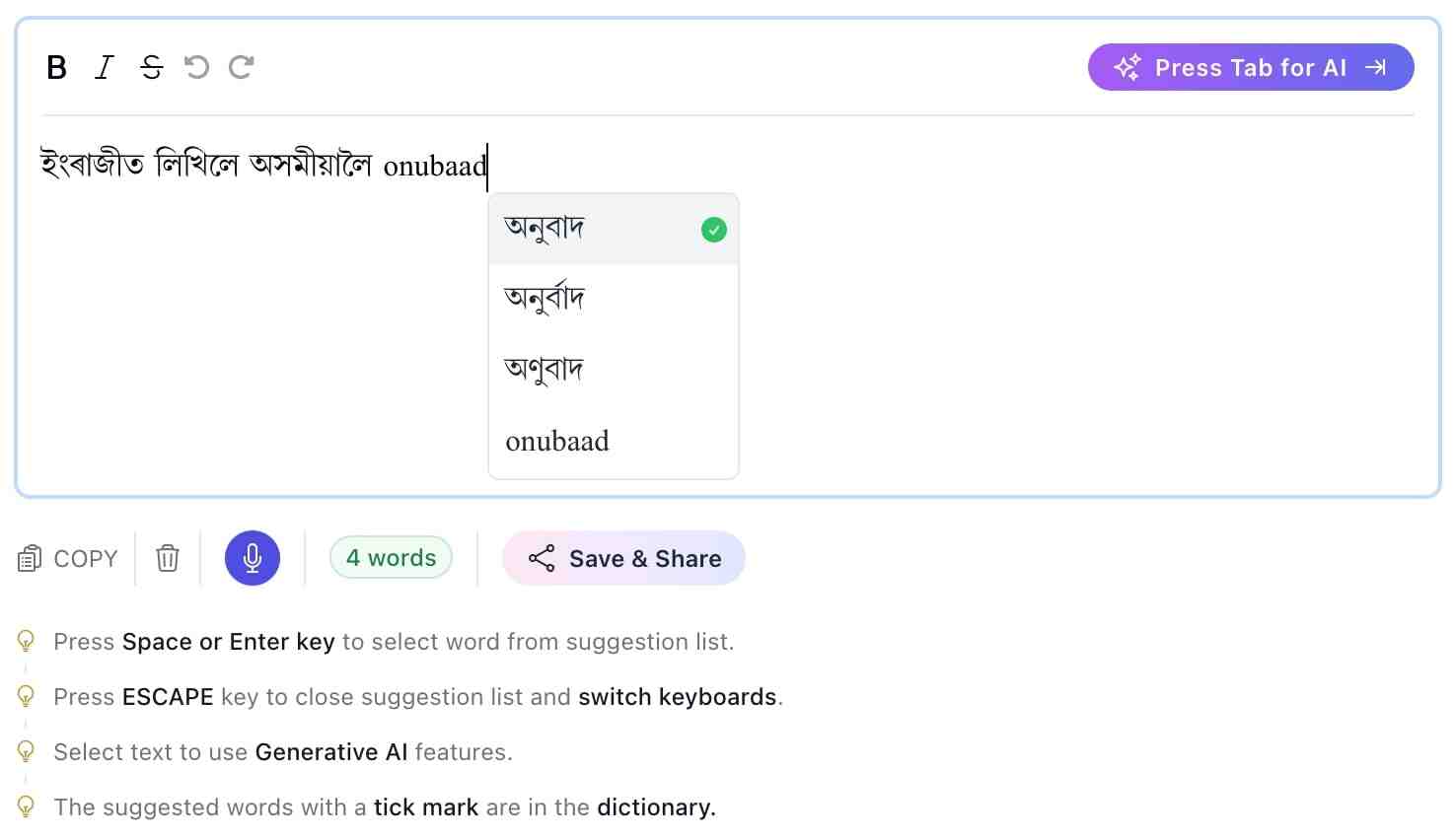
Experience the power of our AI-powered keyboard. Type Assamese faster than ever, even if you don't know the script!
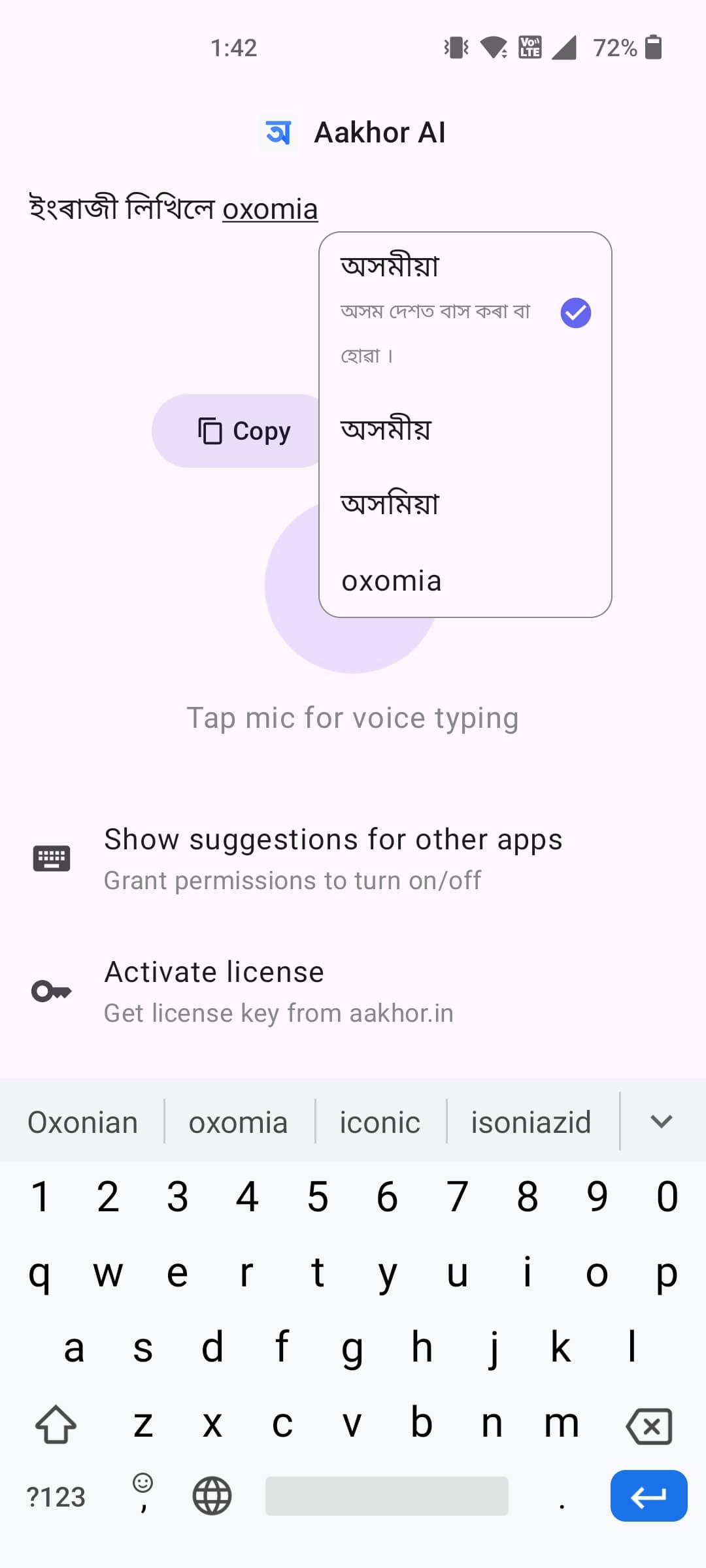
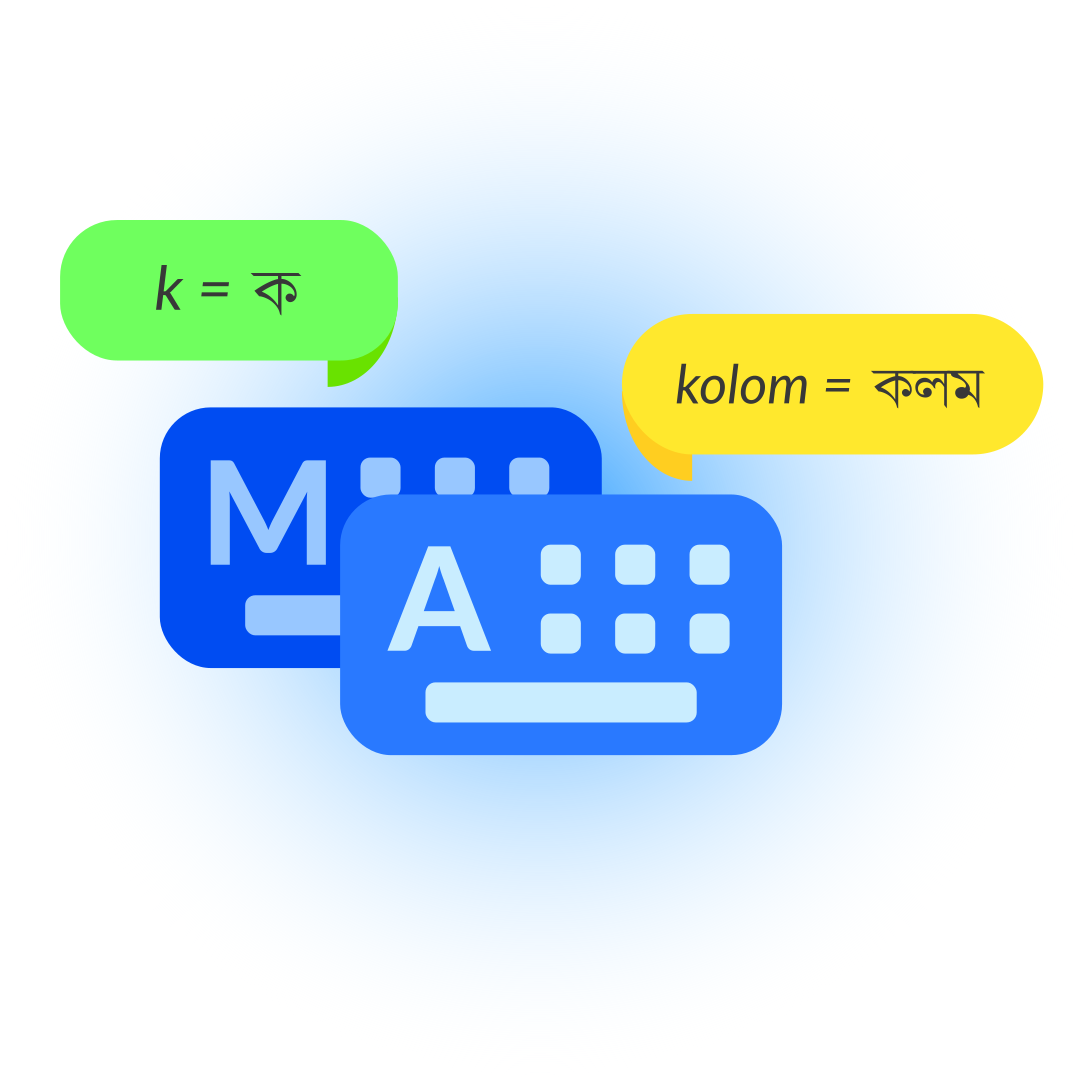
Type Assamese words using English letters and get instant Assamese result.
Get real-time spelling corrections as you type for error-free writing.
Choose from smart AI suggestions to speed up your typing and improve accuracy.
No prior experience needed. Start writing Assamese in minutes!
Type Assamese effortlessly by speaking. Our AI voice typing feature converts your speech to Assamese text in real time, making writing faster and more accessible for everyone.
Use Audiorelay mobile app to use your phone as a microphone for desktop
Boost your productivity with our all-in-one toolkit
Save important thoughts instantly and access them from anywhere.
Easily share your notes with anyone.
Find word meanings, synonyms, and usage with our smart dictionary.
Utilize the power of our tools right from your browser.
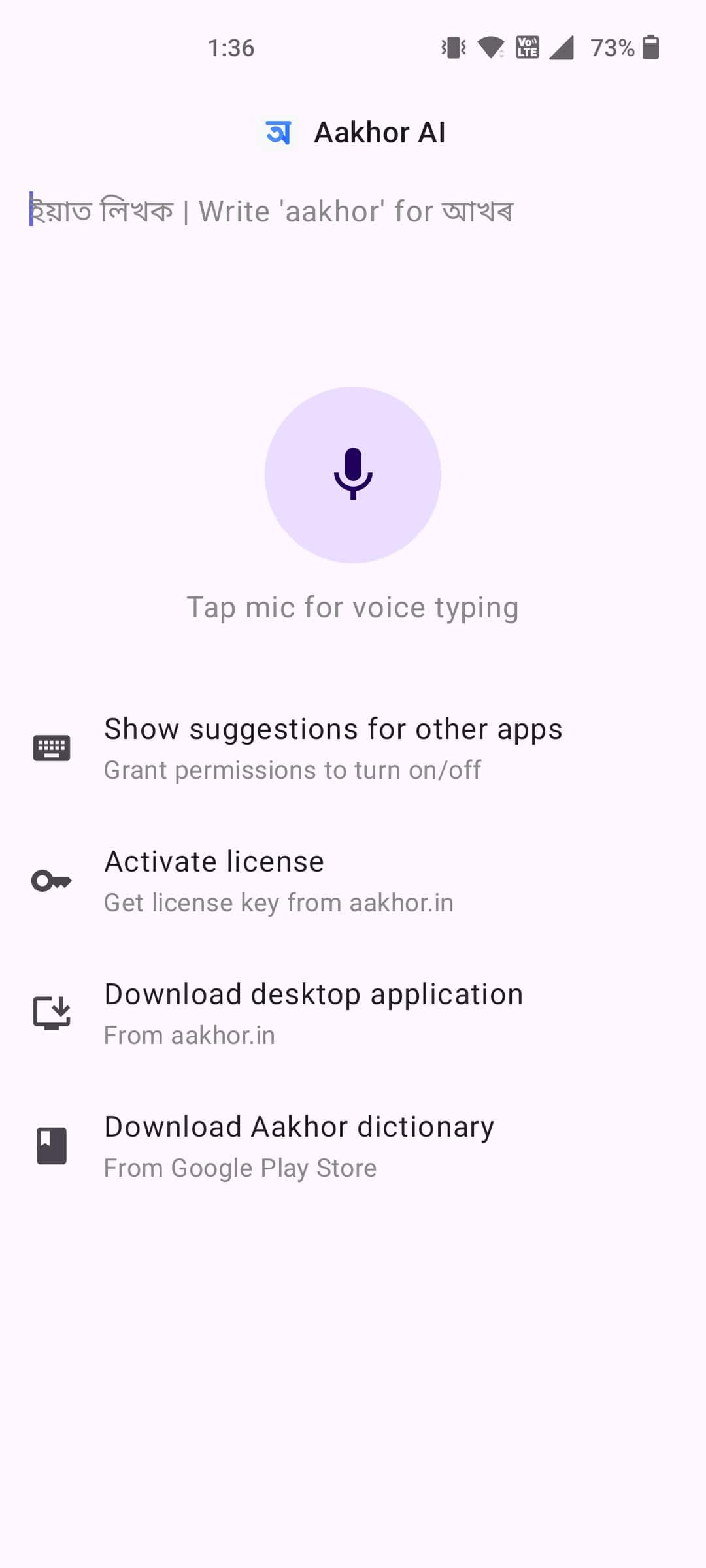
Experience seamless Assamese typing on your phone with our AI-powered mobile app. Enjoy voice typing and smart suggestions for a faster, easier writing experience.
Speak and see Assamese text appear instantly—no typing needed.
Get instant word suggestions as you type for faster, error-free writing.
Trained on millions of Assamese words, Aakhor AI lets you write blazing fast, even with zero typing experience.
The concept of Ayurveda (the science of life) governs the traditional kitchen. Food is medicine. Spices are not just for heat; turmeric is antiseptic, cumin aids digestion, and cardamom is a detoxifier. The lifestyle here is Sattvic (pure, balanced)—emphasizing fresh, seasonal, vegetarian meals eaten with the hands. Why the hands? Ancient texts suggest that the nerve endings in the fingertips stimulate digestion when one touches the food before eating. The joint family system, though fading in urban hubs, still thrives in the act of the thali (platter): a mother serving her child, a wife feeding her husband, and the sacred act of Atithi Devo Bhava (The guest is God). Desi fun .sex then
To live the Indian lifestyle is to accept entropy. It is the ability to find peace in the middle of a traffic jam of cows, cars, and camels. It is the deep-seated belief that everything—joy, sorrow, wealth, poverty—is temporary ( Maya ). And in that transience, one learns to celebrate the present moment with a chai, a smile, and a tilak on the forehead. It is, in every sense, a beautiful chaos. Indian culture, lifestyle blog, Indian traditions, Ayurveda diet, Indian festivals, Sari draping styles, joint family system, modern Indian lifestyle, Yoga and meditation, Indian food diversity. The concept of Ayurveda (the science of life)
India is not a country; it is a continent compressed into a subcontinent—a living museum of human civilization where the 21st century rubs shoulders with the Vedic age. To speak of "Indian culture and lifestyle" is to attempt to describe the fragrance of a million flowers blooming simultaneously. It is chaotic, colorful, deeply spiritual, and paradoxically pragmatic. From the snow-capped Himalayas in the north to the tropical backwaters of Kerala in the south, the lifestyle of an Indian is a daily negotiation between ancient traditions and rapid modernization. The joint family system, though fading in urban
If there is one word that defines the Indian lifestyle, it is Utsav (celebration). With a calendar packed with over 30 major festivals, life in India is a perpetual pause from work. Diwali (the festival of lights) is not just a day; it is a two-week lifestyle shift involving deep cleaning homes, buying new clothes, exchanging mithai (sweets), and bursting firecrackers. Holi, the festival of colors, dissolves social hierarchies for a day as strangers smear gulal on each other's faces.
Indian culture and lifestyle are not static museum artifacts. They are a river—sometimes gentle, sometimes flooding its banks. The youth are redefining what it means to be Indian: they reject regressive practices like dowry and untouchability, yet they embrace the philosophy of Vasudhaiva Kutumbakam (The world is one family). They order pizza with extra cheese, but they still save room for Gulab Jamun .
Contact us for enterprise level solutions
Contact us