HD Videos always in sync
Video players never go out of sync with our cutting edge technology, even across different episode. So binge watch party TV shows in single watch party.
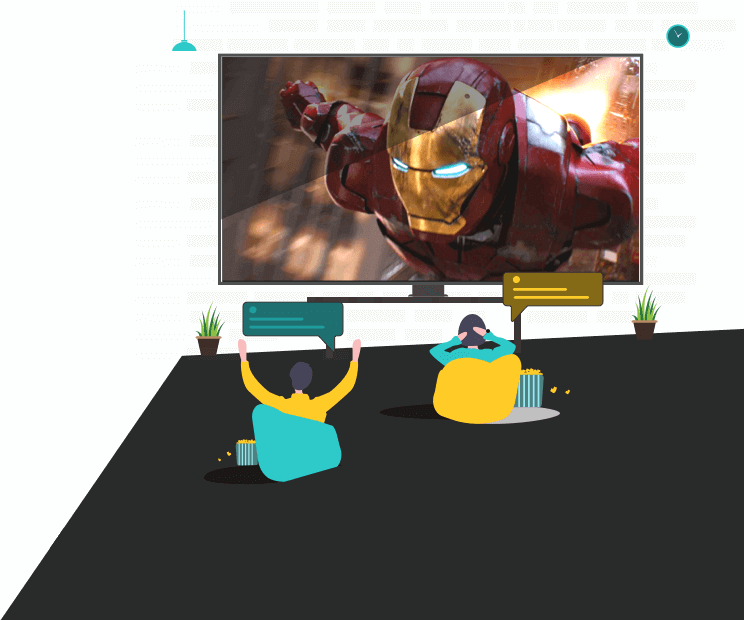
Start playing video on Netflix or other supported platforms.
Once video starts playing, click the Flickcall logo visible on top right to start watch-party (visible for 10 sec). You can also start party from Flickcall icon on chrome toolbar.
Click start party and copy invite link. Send the invite link to anyone to join your watch party.










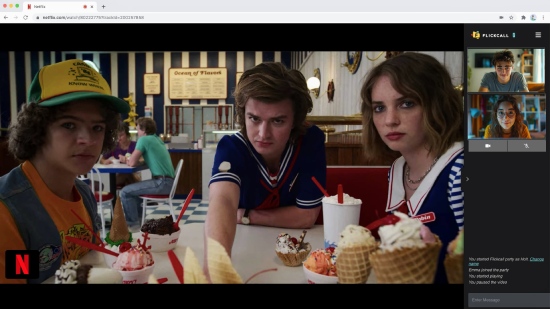
Create watch parties on Netflix, Disney+, JioHotstar, JioHotstar, HBO Max, MAX, Hulu, Prime Video, Youtube, Zee5, Sony Liv, JioHotstar with Flickcall.

Video players never go out of sync with our cutting edge technology, even across different episode. So binge watch party TV shows in single watch party.

Watch your friends laughing with you, Emotions shared in real-time. This is the next best thing after being together.

After installing extension, play the video and click Flickcall logo at top right to start party. Easy-peasy!!
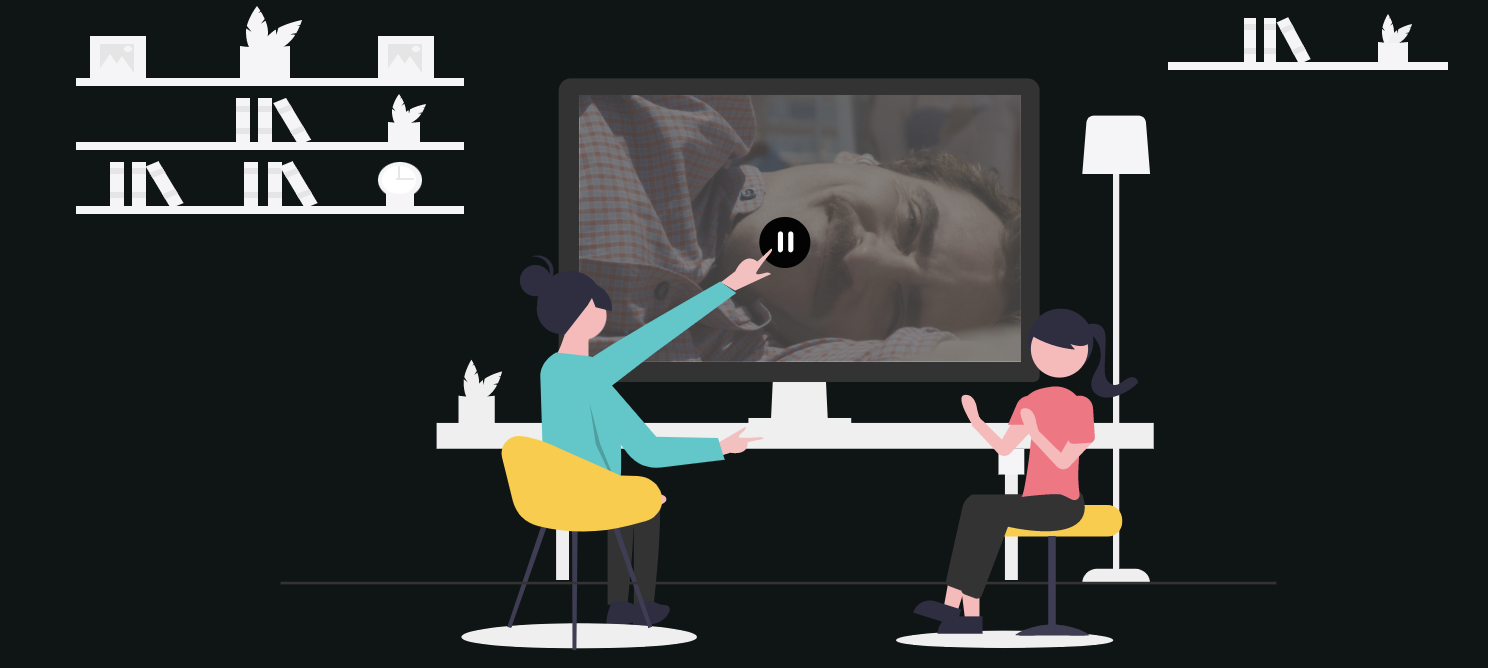
Mic is muted automatically during video play and activated whenever video is paused to engage in seamless conversations. So hit pause and start speaking.
Our peer to peer technology delivers your personal chats and calls directly to your friends instead of the traditional approach of routing it via servers.
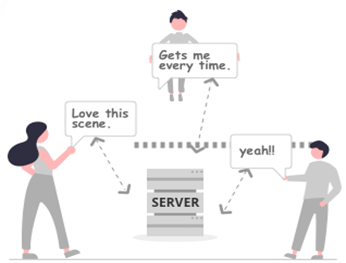
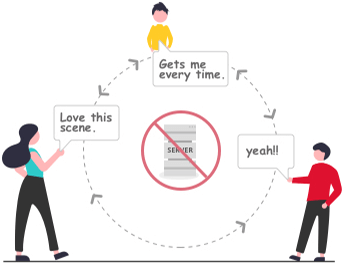
* In some cases, firewall setting doesn't allow direct connection, the calls and messages are encrypted and routed via our servers.
The climax of a great family drama rarely arrives with a car chase or an explosion. Instead, it comes in the form of a confession at a dinner table, a letter left unopened for twenty years, or the decision not to visit a dying parent. This anticlimax is the genre’s greatest strength. It forces the audience to sit in the discomfort of moral ambiguity. We are not asked to choose a hero and a villain, but to recognize that every family member is both perpetrator and victim. When the credits roll on The Godfather , we feel Michael Corleone’s corruption not as a sudden fall, but as a slow, tragic inevitability—a son who became the monster his father created to protect him.
From the blood-soaked betrayals of ancient Greek tragedy to the whispered resentments of a modern prestige television series, the family drama remains the most enduring and potent engine of storytelling. While superheroes and space operas offer escapism, the complex web of family relationships offers something far more visceral: a mirror. This mirror reflects not what we wish to be, but who we fear we are. The power of the family drama storyline lies not in grand spectacle, but in the quiet, seismic collisions between love and resentment, loyalty and betrayal, and the agonizing gap between the family we have and the family we long for.
Furthermore, the modern family drama has evolved beyond the traditional nuclear model to explore the complex relationships found in found families, blended units, and estranged kinship. A storyline about an adopted child searching for their biological parent, or a step-sibling rivalry that transforms into solidarity, challenges the definition of “blood.” The critically acclaimed film Minari demonstrates this beautifully, focusing on a Korean-American family’s struggle to cultivate a farm and themselves on a foreign land. The drama stems not from malice, but from the collision of generational expectations (grandmother vs. Americanized grandchildren) and the quiet heroism of simply holding a fragile unit together against economic and cultural pressure. These narratives remind us that complexity is not a flaw in family relationships; it is the very substance of them.
In conclusion, our enduring fascination with family drama is a testament to the family’s paradoxical role as both a sanctuary and a cage. These storylines give us a language for our own inarticulate griefs and joys. They assure us that the silence at the holiday dinner table, the sibling rivalry that flares at a wedding, and the desperate need for a parent’s approval are not personal failings, but part of the shared human condition. The family is the first society we ever know, and its dramas are the first politics we ever learn. By watching fictional families tear each other apart and, occasionally, stitch themselves back together, we are not just being entertained. We are learning the difficult art of forgiving the unforgivable—starting, perhaps, with the face we see in the mirror.
At its core, a compelling family drama is built on a foundation of unresolved history. Unlike friendships, which are chosen, or professional relationships, which are contractual, family bonds are inherited. This biological and legal permanence creates a pressure cooker of unspoken debts, old wounds, and calcified roles. The “black sheep” is forever trying to prove their worth, the “golden child” is crushed by the pedestal they stand on, and the parent often cannot see the adult child standing before them, only the infant they once held. Storylines that resonate—such as the simmering jealousy between brothers in East of Eden or the suffocating politeness of the Besford family in The Nest —thrive on this friction. The drama is not generated by external villains but by the internal logic of the family system itself, where every act of kindness is freighted with a decade of context, and every argument is a ghost repeating an older fight.
One of the most potent tools in this narrative arsenal is the . A family drama often functions as a genealogy of pain, showing how a parent’s unfulfilled dream, unmanaged anger, or secret shame becomes a child’s curse. In Succession , the media empire is merely the stage; the real plot is the viral spread of Logan Roy’s emotional brutality through his four children, each of whom replicates his cruelty in a different, pathetic key. Similarly, the films of Ingmar Bergman, such as Autumn Sonata , dissect how a mother’s artistic ambition leaves a daughter marooned in a sea of emotional neglect, a wound that never heals but only scabs over with passive aggression. These storylines compel audiences because they validate a universal, uncomfortable truth: we are all, to some degree, our parents’ unfinished business.