The 240x320 resolution was a common screen size for many feature phones and early smartphones. This resolution provided a decent balance between graphics quality and performance, allowing developers to create engaging games that could run smoothly on lower-end hardware. Many 240x320 Java games were designed to be played in portrait mode, with simple controls and easy-to-read text.
In the early days of mobile gaming, Java-based games were all the rage. These games were designed for feature phones, which were popular before the rise of smartphones. One of the most iconic resolutions for these games was 240x320 pixels, which became a standard for many devices. If you’re feeling nostalgic for those days, you’re in luck! In this article, we’ll explore the world of 240x320 Java games and provide you with links to free download Jar files. 240x320 Java Games Free Download Jar
Java games were developed using the Java programming language and were designed to run on Java-enabled devices, such as feature phones and early smartphones. These games were known for their simplicity, addictive gameplay, and limited graphics capabilities. Despite these limitations, Java games were incredibly popular, and many classic titles, such as Snake, Tetris, and Puzzle games, were developed using this technology. The 240x320 resolution was a common screen size
240x320 Java Games Free Download Jar: A Blast from the Past** In the early days of mobile gaming, Java-based
Kali + Additional Tools + Vulnerable Applications in Docker containers...
A vulnerable VM that you will use to perform a full assessment (from reconnassaince to full compromise)
Another vulnerable VM that you will use to perform a full assessment (from reconnassaince to full compromise)
This video explains how to setup the virtual machines in your system using Virtual Box.
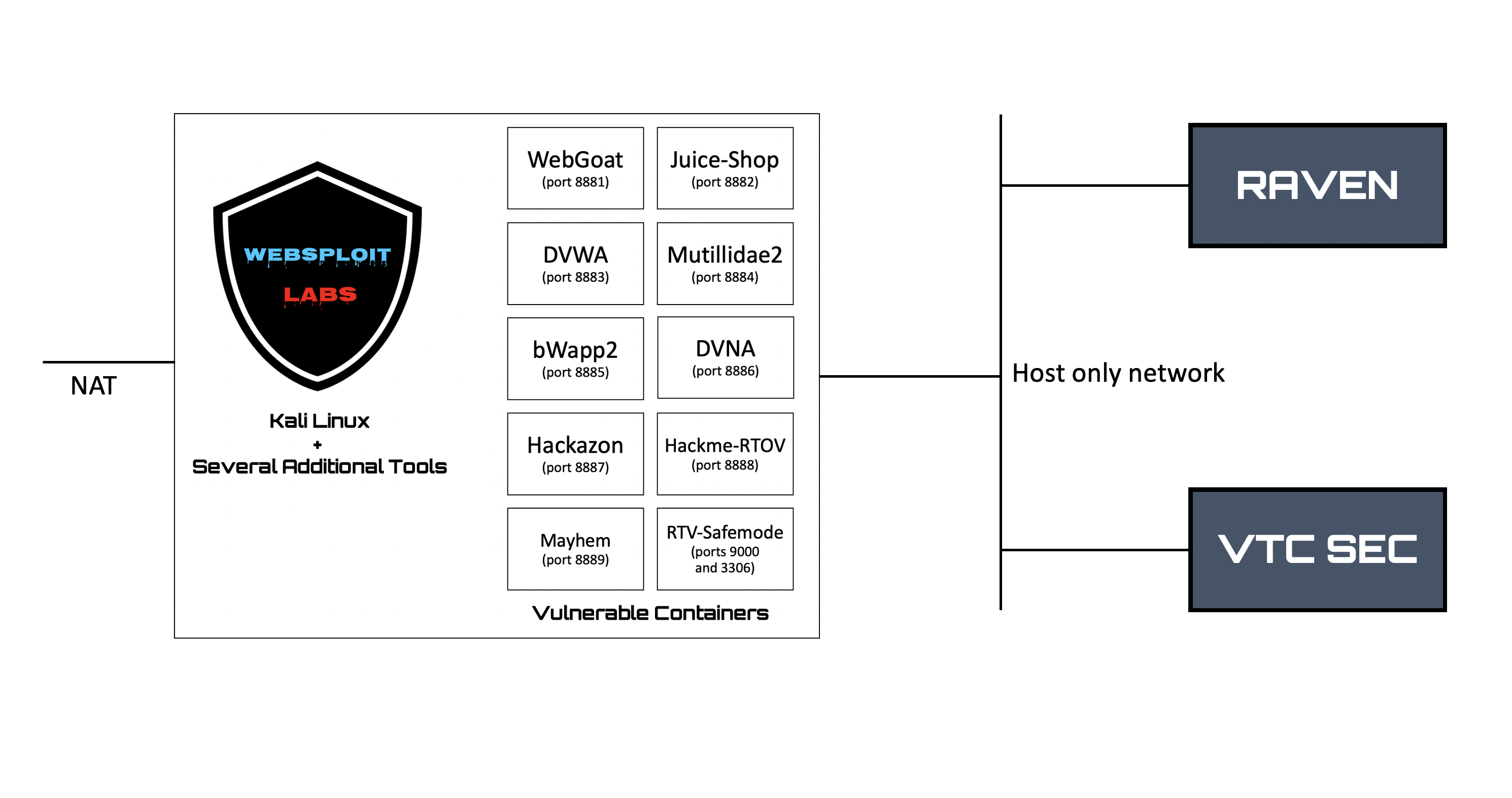
The diagram below shows the lab architecture with WebSploit Full version, Raven, and VTCSEC. The VMs were created in Virtual Box. It is highly recommended that you use Virtual Box. However, if you are familiar with different virtualization platforms, you should be able to run the VMs in VMWare Workstation Pro (Windows), VMWare Fusion (Mac), or vSphere Hypervisor (free ESXi server).
You should create a VM-only network to deploy your vulnerable VMs and perform several of the attacks using WebSploit (Kali Linux), as shown in the video above. You can configure a separate network interface in your WebSploit VM to connect to the rest of your network and subsequently the Internet. Preferably, that interface should be in NAT mode.
Stay in Touch with Omar!